
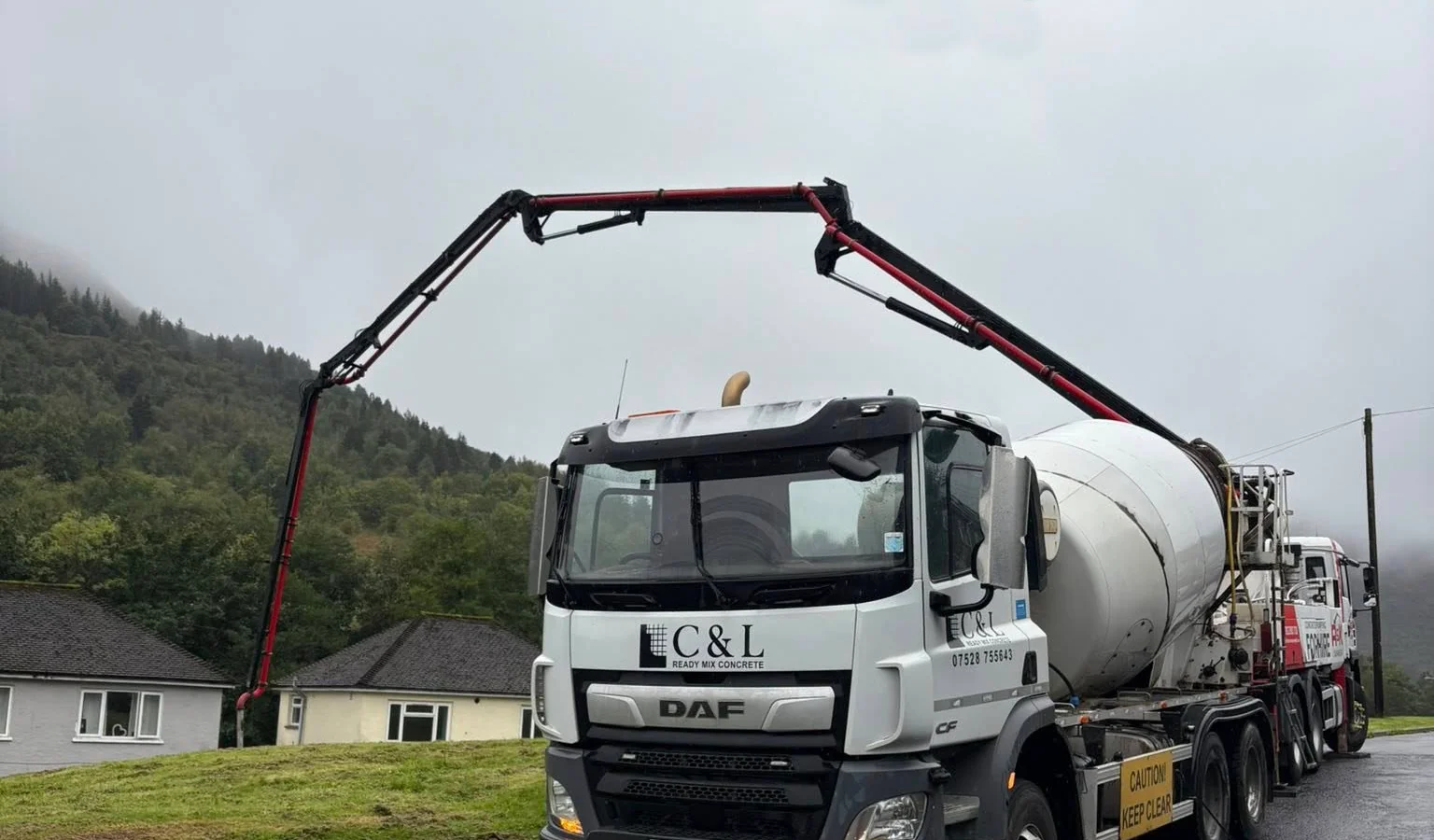
When access is straightforward, a transit mixer can discharge directly into your formwork. But what happens when your project is located in a rear garden, down a narrow side alley, down a flight of steps, or inside a property?
For years, the traditional solution was a line of workers with wheelbarrows. However, for modern homeowners, DIYers, and local builders across South Wales, professional concrete pumping has transformed site logistics. Here is why concrete pumping is essential for hard-to-reach sites and how it saves you time, money, and hassle.
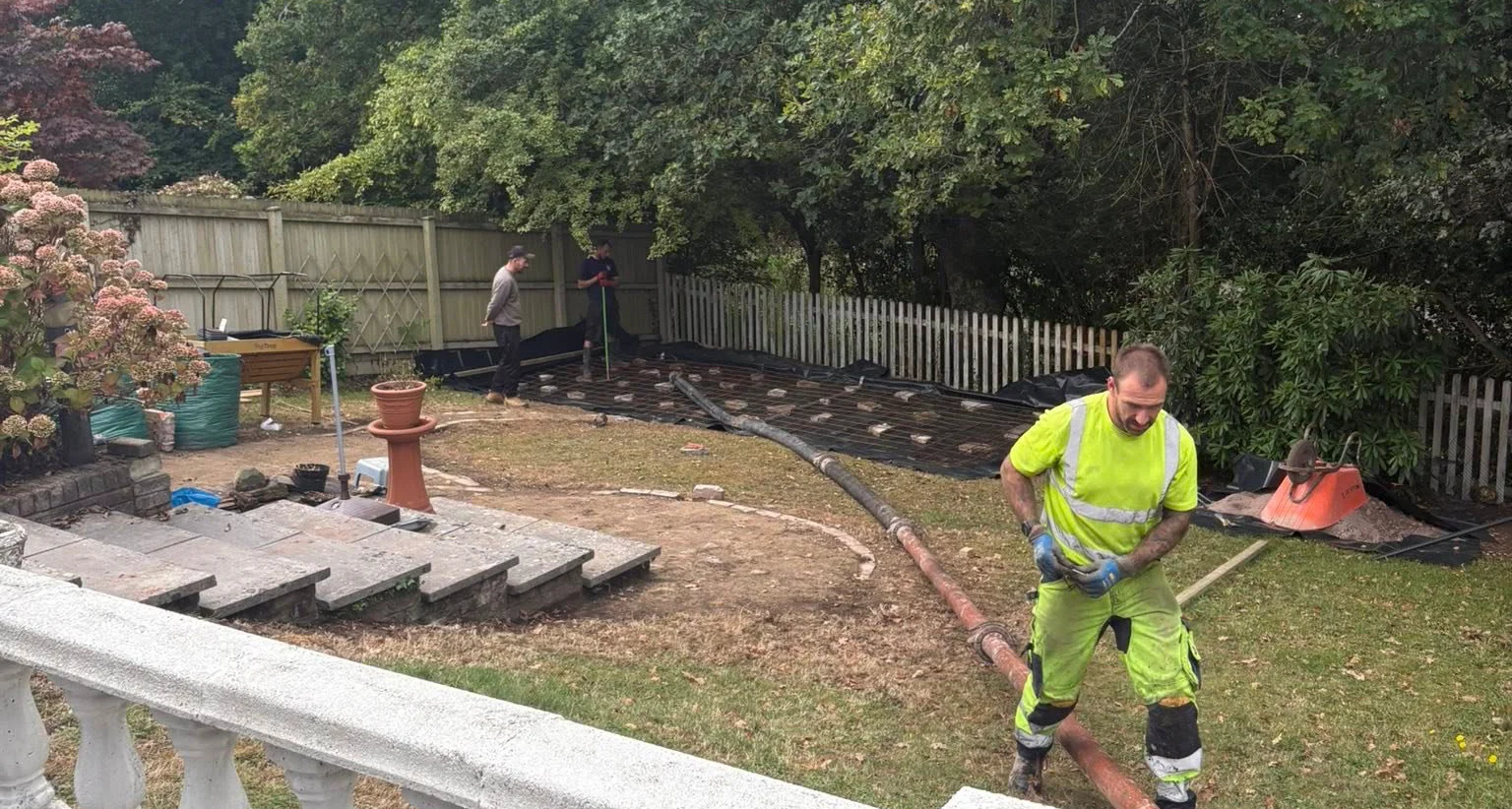
1. Eliminates Exhausting, Back-Breaking Labour
Wheelbarrowing fresh concrete is brutally hard work. A single cubic metre of concrete weighs around 2.4 tonnes—translating to roughly 25 to 30 heavy wheelbarrow loads. If you are pouring a modest 4m³ base for a garden building or home extension, that means shifting close to 10 tonnes of material by hand.
Using a concrete pump entirely eliminates this physical strain. Instead of spending hours pushing heavy barrows up ramps and over uneven ground, a flexible pipeline delivers the concrete smoothly and effortlessly right where you need it.
2. Speeds Up Your Pour & Prevents Cold Joints
Concrete is a time-sensitive material. Once mixed, it has a limited window before it begins to set.
- The Wheelbarrow Trap: Unloading a truck via wheelbarrows can take hours. As the pour drags on, early layers begin to stiffen while later layers are added, creating "cold joints"—weak points in your concrete structure that are prone to cracking and water ingress.
- The Pumping Advantage: A concrete pump can place an entire truckload of concrete in a fraction of the time, keeping the entire batch fresh and workable. This guarantees a uniform, seamless finish and superior structural strength.
3. Protects Your Property & Landscaping from Damage
- Deep ruts and churned-up lawn space
- Damaged garden paths, paving slabs, and tarmac
- Accidental concrete spills on walls, doorways, and flowerbeds
4. Reaches Access Points You Simply Can't Access by Hand
Some sites are practically impossible to reach using traditional manual methods. Concrete pumping solves complex access problems with ease, including:
- Rear Gardens with No Side Access: Pipelines can be run straight through a property or over boundary walls.
- Steep Slopes & Terraced Gardens: No need to negotiate dangerous ramps or steep steps with a top-heavy wheelbarrow.
Internal Pours & Basements: Perfect for pouring sub-floors, conservatory bases, or basement conversions where space to manoeuvre is severely restricted.
5. Slashes Overall Project Costs
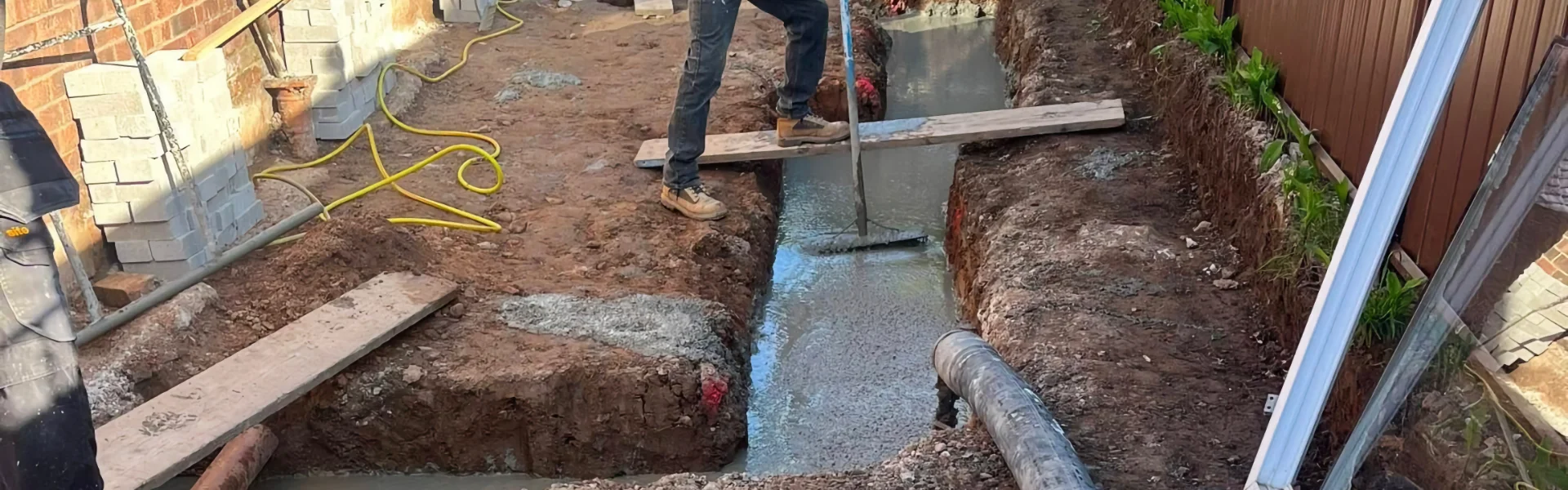
Reduced Labour Costs: Instead of hiring a team of three or four labourers to run wheelbarrows for half a day, a pumped pour usually requires just one or two people to guide the pipe and rake the mix.
No Waiting Time Penalties: Concrete delivery vehicles charge waiting fees if they are kept on site too long. Pumping gets the truck unloaded rapidly, avoiding costly standing charges.
Zero Waste: Pumping allows for precise placement, reducing spills, messy cleanup, and wasted material.